Key Features of the DIGIHUMAN Human Anatomy VR Teaching System
The DIGIHUMAN Human Anatomy VR Teaching System is designed to provide students with a comprehensive and immersive educational experience. One of the primary components of this system is the VR headset, which each student wears to achieve a 360-degree immersive visual experience. This headset features high-resolution displays that ensure detailed anatomical visualization, allowing students to observe structures with remarkable clarity.
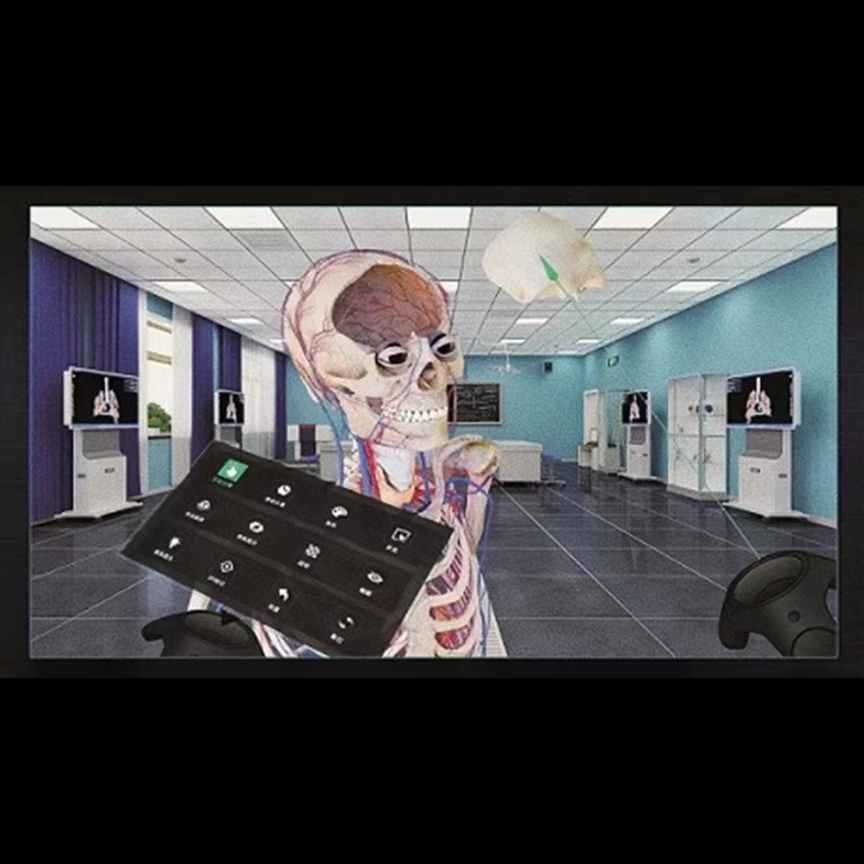
Importance of High-Resolution Displays
The quality of the visual experience is crucial for effective learning. High-resolution displays in the VR headset allow students to see intricate details of anatomical structures, enhancing their understanding and retention of information. This clarity is essential for medical education, where precision and accuracy are paramount.
Hand Controllers for Interaction
Another key feature of the DIGIHUMAN Human Anatomy VR system is the hand controllers used by students. These controllers accurately track hand movements, enabling students to interact with the virtual environment seamlessly. With these controllers, students can manipulate anatomical models, perform virtual dissections, and engage with the content actively.
Engaging Students in Learning
The combination of high-quality visual experiences and interactive hand controllers creates a dynamic learning environment. Students are empowered to explore anatomical structures at their own pace, enhancing their learning outcomes. This interactive experience is particularly beneficial in understanding complex systems, such as the human musculoskeletal or cardiovascular system.
Conclusion
In summary, the DIGIHUMAN Human Anatomy VR Teaching System incorporates advanced features like high-resolution VR headsets and responsive hand controllers. These elements work together to provide an engaging and effective learning experience for students, making anatomy education more accessible and enjoyable.
